A New Mexico state judge ordered Meta Platforms on Wednesday to pay $25 billion for misleading users about its data-privacy practices — one of the largest consumer-protection judgments in U.S. history and a direct validation of warnings National Legal and Policy Center delivered to Meta shareholders five months ago.
The judgment lands roughly 150 days after Meta’s May 27 annual meeting, where NLPC urged shareholders to support Proposal Three, calling for a board-level report on the operational, financial, and public-welfare risks of Meta’s AI-data strategy. The board urged a vote against. Shareholders took the board’s advice. The bill arrived anyway.
And it arrived with a judicial finding that reads like a brief for everything NLPC’s solicitation report to Meta investors had argued.
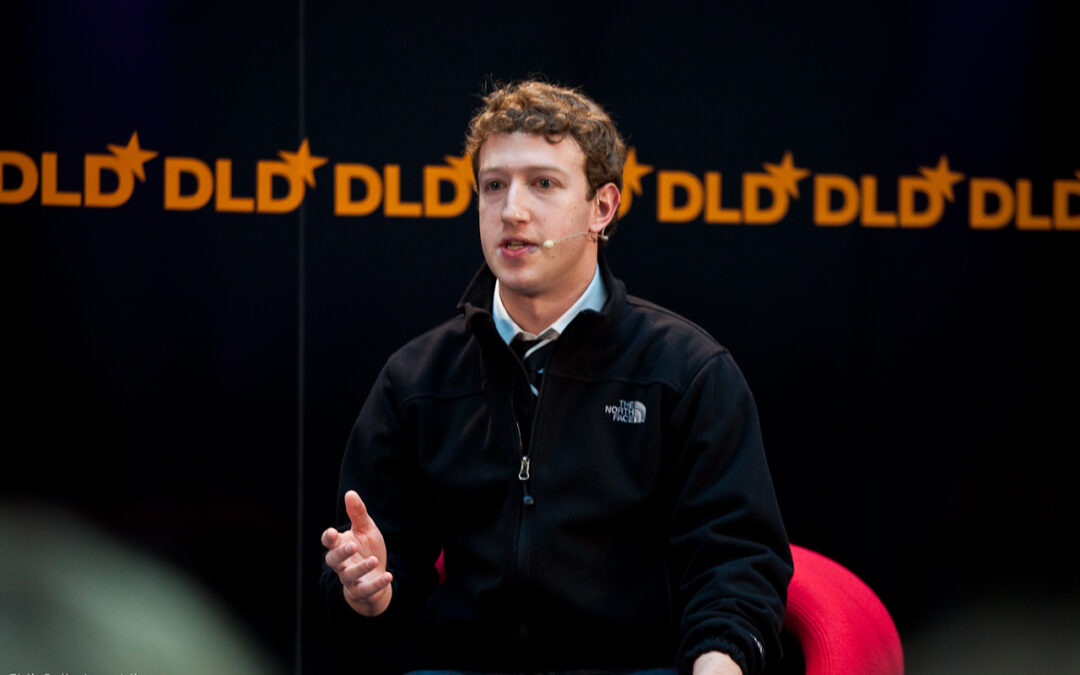
“To induce users to provide their personal information to Facebook, Facebook made many false promises respecting the security and control of that data over the course of more than a decade,” Judge Francis Mathew wrote in his order. The jury had found roughly 44 million separate violations of New Mexico’s unfair-practices law, tied to a decade of public statements by the Company and Chief Executive Mark Zuckerberg (pictured above).
The judgment is remarkable not only for its size. It is remarkable for Judge Mathew’s framing. He ruled the state was legally entitled to the statutory maximum — more than $200 billion — and set $25 billion only because courts have discretion to pick an amount that will survive appeal.
“The violations the jury found were not the product of a single mistake statement or isolated incident,” he wrote.
That is a court of law describing the governance pattern Meta shareholders are supposed to be able to see from the Company’s existing disclosures.
They cannot. That was the point of Proposal Three.
Meta’s response reinforces the problem. The Company’s chief legal officer, C.J. Mahoney, said the ruling and New Mexico’s enforcement approach make it “all but impossible to do business in the state of New Mexico” and recast the case as an attempt “to impose a tax on speech.”
The underlying case has nothing to do with speech. It is about whether Meta deceived its own users about what the Company was doing with their personal data — the same question NLPC asked shareholders to insist on answering through a formal board-level risk report.
Meta argued at the penalty hearing, through counsel Matt Nicholson, that the appropriate figure was somewhere between $345 million and $3.5 billion. The judge chose $25 billion. The spread tells investors what they need to know about the Company’s grasp on how courts now view its data practices.
This is also not an isolated hit. New Mexico won a separate $942 million verdict against Meta in August over the Company’s failure to protect young users from online predators and resulting mental-health harm. Earlier this year, 48 other states reached a $17 billion settlement with Meta over social-media-addiction and consumer-protection claims. In March, back-to-back jury verdicts in New Mexico and Los Angeles opened a new design-based theory of platform liability that narrows Section 230’s practical shield.
The pattern is not slowing. It is intensifying. And it is intensifying as Meta ramps 2026 capital expenditures to $115–135 billion, much of it directed at building the next generation of AI products on top of the same user-data strategy a New Mexico court just called a decade of false promises.
Meta plans to appeal, and the $25 billion figure will likely shrink before it is final. That is cold comfort for shareholders. The judicial finding — that Meta misled users about data privacy for more than ten years — is not going away on appeal. It is a matter of record. The reputational, regulatory, and litigation consequences compound from here.
What Proposal Three asked for was simple: an annual report telling investors what management knows about this exact category of risk and what it is doing about it. The board said no. A New Mexico courtroom just produced the first installment of what that answer should have looked like, and attached a dollar sign to the front of it.