If the shareholder proposal is the one channel a small owner has left, why doesn’t every frustrated investor use it?
Because the channel is a gauntlet. Walk it once and the surprise is not that so few owners try — it is that anyone does.
Start with the ticket of entry. To submit a resolution, you must have held at least $2,000 of the company’s stock for three years (or $15,000 for two years or $25,000 for one year), on your own, since you cannot pool shares with other owners to clear the bar.
Your case has to fit in 500 words, arrive months before the meeting, and amount to one proposal per company each year. You must also offer to meet with management on its schedule.
Then the real contest begins. The company can ask the Securities and Exchange Commission for permission to keep your proposal off the ballot — the “no-action” request — and that is where many proposals die.
Company lawyers, usually from one of the white shoe law firms, comb your wording for a way to fit it through one of the rule’s exclusions. They argue it intrudes on “ordinary business,” or “micromanages” the firm, or reads too vague to vote on.
You — most likely not being a lawyer — answer each argument, in writing, on a deadline, well enough to keep the resolution alive. The burden sits with the company, but you are the one who has to carry the rebuttal.
Survive that, and you are still not done. To reach other shareholders — whose votes, as we have seen, mostly rest with the index giants — you write an exempt solicitation, a sourced report built to withstand the same scrutiny a regulator would apply.
Then you, or someone you send, attend the annual meeting and present the proposal aloud. You’ll probably get two or three minutes — over the phone, because almost all meetings are virtual now — to make your case. And that’s after probably 99 percent+ of the votes have been submitted.
With all of that, the proposal is, in almost every case, advisory. A win does not bind the company to lift a finger.
This is not the work of someone chasing attention. Nobody seeking headlines spends a season arguing a no-action footnote with a securities lawyer.
The grind is itself the answer to anyone who calls this a publicity stunt. A stunt is easy. This is the opposite of easy.
It is expensive, slow, technical, and done out of public view. None of it runs on enthusiasm — it takes people who know the rule, the case law behind each exclusion, and the filing calendar, and who can absorb the cost of losing, season after season, while the practice shifts over time.
That is why an individual shareholder almost never attempts it alone, and why the field sat so empty for so long. The emptiness is the case for an organization. NLPC’s Corporate Integrity Project exists because the barriers that silence one owner can be shouldered by a group that does this full time — the research, the drafting, the no-action fights, the solicitations, the meetings.
Now hear how the other side describes that work. Management calls it an abuse of the process.
Using a process the way it was built to be used is not abuse. The shareholder proposal exists so owners can put a question to the company they own; exercising that right is the system working, not the system being gamed.
The honest question runs the other way. Who is abusing the arrangement — the owner who asks once a year, or the apparatus built to keep the question off the ballot?
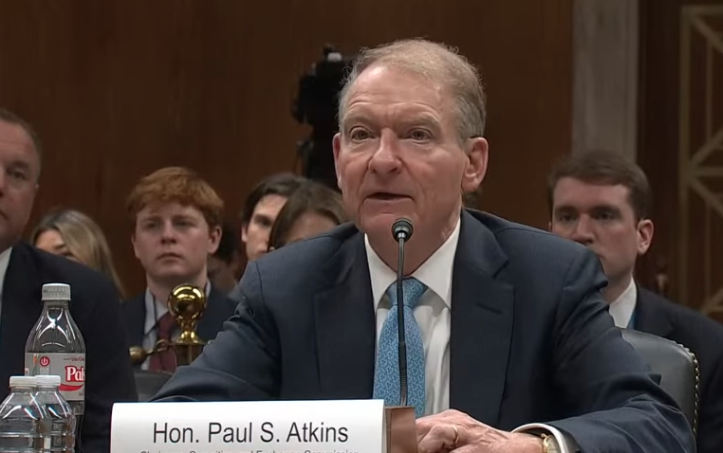
That apparatus may be about to grow stronger. As of mid-2026, the SEC under Chairman Paul Atkins (pictured above) is moving to narrow the opening further. Late in 2025, the agency’s staff stepped back from refereeing most disputes over whether a company can exclude a proposal. In a speech that fall, Atkins urged a rethink of the rule’s “fundamental premise that shareholders should be able to force companies to solicit for their proposals” at little cost to themselves.
He has floated more — a reading of Delaware law under which companies might exclude advisory proposals across the board. Advisory proposals are roughly 98 percent of everything filed. Rules billed as easing “compliance burdens” on companies are forecast for 2026.
Raise the thresholds, or rewrite the premise, and the one narrow door an owner still has begins to swing shut.
That is the stake. A company belongs to its shareholders, and the right to be heard inside it was won the hard way — and is being tested again.
NLPC exists to hold that door open, and to walk through it for owners who cannot make the trip alone. The work is thankless by design. Someone has to do it anyway.