Investor: “…the pressure moves from ‘deliver the turnaround’ to ‘explain why you’re still the right person to lead it.’”
PepsiCo cut its full-year core earnings growth forecast on Thursday from the low end of 4% to 6% growth to just 1% to 2% — a reduction of more than half at the midpoint — as the company’s North American food and beverage business continued to deteriorate through the third quarter despite months of restructuring promises.
That is not a guidance trim. That is a collapse.
The number that tells the real story is not the headline revenue figure — net revenue grew 5.6%, which Reuters dutifully reported — but what is buried inside it. PepsiCo’s Q3 earnings release shows that $178 million in one-time tariff refunds contributed four percentage points to core operating profit growth in the quarter.
Strip those out and core operating profit growth would have been negative. On a rough after-tax basis, removing the tariff refunds would have left core EPS approximately flat to slightly below last year’s $2.29 — rather than the 2% increase management reported.
Meanwhile, PepsiCo’s core operating margin contracted 35 basis points in Q3 and is down 25 basis points year-to-date at 16.5% of revenue. In December 2025, following activist investor Elliott Investment Management’s $4 billion intervention, PepsiCo committed to expanding that margin by 100 basis points over three years. Ten months in, the margin is moving in the wrong direction.
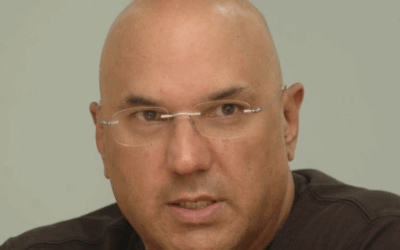
Chairman and CEO Ramon Laguarta (pictured above) acknowledged as much on Thursday’s earnings call.
“Our business in North America performed below our expectations,” he said — a sentence that would have been equally accurate after Q1, after Q2, and after every quarter since the Elliott deal was struck.
He also said, “We don’t expect the consumer to suddenly be in a much better place in the next 12 to 18 months.”
That is not a turnaround in progress. That is a CEO pre-loading the excuse for 2027.
North America’s numbers confirm it. PepsiCo Foods North America delivered slightly lower organic revenue and roughly flat food volume in Q3. PepsiCo Beverages North America saw organic volume decline 2%. The company’s core operating profit in its North American foods segment is down 8% year-to-date. The stock touched a six-year low this week before ticking up on Thursday after the revenue beat.
One investor quoted by Reuters put the situation plainly: “Next couple of quarters need to show real North American inflection, or the pressure moves from ‘deliver the turnaround’ to ‘explain why you’re still the right person to lead it.’”
That is the right question. It is also the question that PepsiCo’s board is structurally unable to ask with any credibility — because the person who would need to answer it is the same person who chairs the board.
National Legal and Policy Center raised exactly this concern when it presented a shareholder proposal at PepsiCo’s May 6 annual meeting calling for an independent board chair. NLPC’s exempt solicitation report, circulated to PepsiCo investors in the spring, documented in detail how Laguarta’s combined role as Chairman and CEO had produced a governance structure incapable of demanding the accountability that shareholders deserve.
The proposal did not pass. And so the board chaired by Laguarta continues to evaluate Laguarta — quarter after quarter, guidance cut after guidance cut — while the North American business that once defined one of the most iconic consumer brands in the world keeps losing ground.
An independent board chair would not be asking Laguarta why the consumer is still struggling with gas prices. An independent board chair would be asking whether a CEO who has presided over a six-year erosion of the company’s core North American franchise, required a $4 billion outside activist to force strategic change, and now faces a guidance cut of more than half at the midpoint is still the right person to be leading this company.
PepsiCo’s board, as currently constituted, cannot ask that question without asking it of itself.