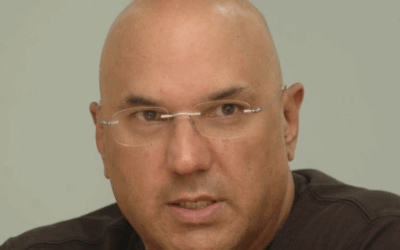
Fortune this week credited Jamie Dimon (pictured above) with spending “years warning” Americans about China, then putting $230 billion behind the fix. The magazine traced those warnings to the JPMorgan Chase CEO’s 2024 letter to shareholders, where he wrote that America had “slept” while China built its economic power.
That timeline skips what Dimon’s bank was doing in China before, during and after those warnings. Some of it happened this year.
JPMorgan raised money for a Pentagon-listed Chinese military company
On January 7, 2025, the Pentagon placed CATL, the Chinese battery giant, on its list of Chinese military companies, according to a House Select Committee on China investigation. The committee urged JPMorgan to pull out of CATL’s Hong Kong stock sale. JPMorgan helped sell the shares anyway in May 2025, and the committee subpoenaed Dimon that July, Reuters reported.
The committee’s May 2026 findings say JPMorgan, Bank of America and Morgan Stanley then joined a second CATL offering to raise “billions more.” The banks “trusted CATL’s representations” over the Pentagon’s judgment, even after CATL gave the same canned reply to each item on a JPMorgan due-diligence list about its military ties, according to Fox News. The committee also stated that the banks broke no U.S. law.
JPMorgan’s defense? A spokesperson said CATL’s battery technology “will strengthen U.S. manufacturing.”
That statement came seven months after Dimon launched a $1.5 trillion program sold as the cure for American dependence on unreliable foreign suppliers. NLPC flagged the CATL deal against that pledge in April. The same week the House findings came out, JPMorgan hosted its 22nd annual Global China Summit in Shanghai, drawing more than 1,300 companies, China’s state-run Global Times noted.
The bank paid $264 million for hiring Chinese officials’ children & friends
None of this is new behavior. In 2016, JPMorgan paid more than $264 million to the SEC, the Justice Department and the Federal Reserve to settle charges over a seven-year scheme that hired about 100 relatives and friends of Chinese officials to win business. Bankers tracked the payoff in spreadsheets titled “Referral Hires vs Revenue.”
In the SEC’s announcement, its enforcement director said JPMorgan employees “knew the firm was potentially violating” federal anti-bribery law “yet persisted.” Another official noted that “not a single referral hire request was denied.”
Dimon has been CEO since January 2006 and Chairman since 2007. In 2012, Xiang Junbo, then China’s top insurance regulator, asked him at a New York meeting for a U.S. job for a young family friend. Dimon told him the bank would “do what we can,” according to The New York Times. JPMorgan created an internship for her, then offered a full-time position.
JPMorgan said Dimon played no role in the hiring decision. In 2020, China sentenced Xiang to 11 years in prison for taking bribes.
Dimon’s tough talk bends to the business
In November 2021, Hong Kong waived its 21-day hotel quarantine for Dimon’s 32-hour visit. The city’s leader defended the favor by calling JPMorgan “a very huge bank with key business in Hong Kong,” Fortune wrote at the time.
A week later, Dimon joked that his bank would outlast China’s Communist Party. He apologized within a day, saying “it’s never right to joke about or denigrate” a country’s leadership.
In May 2023, he met Shanghai’s Communist Party chief and said JPMorgan would stay in China “for good and bad times,” Bloomberg reported. Four months later he told investors that “the risk is bad.” NLPC had made that case to shareholders earlier that year.
The $230 billion number does not hold up well either
JPMorgan’s one-year announcement says the firm “financed and facilitated more than $230 billion in transactions.” It never defines those words or lists the deals behind the total.
The Wall Street Journal reported that the sum includes the $125 billion NextEra–Dominion merger, which bankers admitted they would have worked on with or without the program. The firm was one of two advisers to Dominion. JPMorgan’s own release says almost a third of the activity took place outside the United States.
Take out the merger and the foreign share, and year one may come to something near $30 billion of U.S. activity, about 2% of the pledge. JPMorgan has not said whether it counted the merger at full value.
Dimon has called the program “100% commercial,” per Bloomberg News. He also told the Journal it lets JPMorgan back companies “at an earlier stage than JPMorgan would normally do.” Riskier bets call for clearer disclosure. JPMorgan’s latest quarterly filing refers to the program’s stock purchases in passing, as one reason the bank’s “other assets” grew.
Fortune dates Dimon’s China warnings to 2024. JPMorgan was still defending its CATL work this May.