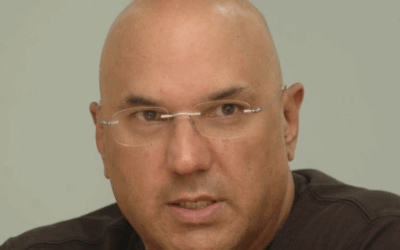
NLPC has summarized the accounts of the sabotage (including a “58-minute read” by the New York Times) waged by former Disney CEO Robert Iger (pictured above, right) upon his successor Bob Chapek (left), which in hindsight had the effect of dumping COVID- and Florida “Don’t-Say-Gay” bill-related headaches on the latter in 2021-2022. This more-or-less put the blame for financial losses and political consequences on Chapek, which then led to the return of Iger to head the company, for what turned out to be four more years.
Now Chapek is out with his side of the story in a new book, which he has been promoting in various interviews. One of those was with the Wall Street Journal, which confirmed some points in the chronology that NLPC highlighted at the time. From the Journal‘s transcript of its interview, beginning with its backgrounder on the controversial Florida law, followed by Q&A:
In March 2022, three months after Iger stepped down as executive chairman, Disney employees were in an uproar over a Florida bill prohibiting instruction on sexual orientation and gender identity in certain grade levels at schools. Iger posted that the “Don’t Say Gay” bill, as it was described by opponents, would “put vulnerable, young LGBTQ people in jeopardy.” Chapek initially said corporate statements against legislation were counterproductive. Four days later, he apologized, pledged to be a better ally to the LGBTQ+ community, and said Disney would pause political giving in the state.
Do you think apologizing for the initial statement was a mistake?
It was a mistake. I was pushed into it.
Who pushed you into doing that?
Powers bigger than me.
Can you be more specific?
No.
Is that because of legal concerns? Or because you don’t want to get caught up in another political controversy?
All of the above.
Did Iger’s statement have an effect on your ability to do your job?
A huge effect, because what it did is conveniently align him with the very people I was trying to win over, which was the creative community. Remember, I spent the first year and a half of my job doing Zoom calls. I couldn’t get out and establish relationships. He had them on speed dial.
No two U.S. states are more critical to Disney than California — home to the majority of the company’s artistic “creative community” — and Florida, the Disney parks revenue generator, where Gov. Ron DeSantis has led a conservative ascendancy to power. The bill in question (now law) — poorly explained by the Journal — protected parental rights over their children’s education by preventing teaching about sexual orientation and gender identity at lower grade levels, and required notification of parents about certain teachings or student behaviors.
It was into this cauldron that Iger — now supposedly on the sidelines at Disney — tweeted, “If passed, this bill will put vulnerable, young LGBTQ people in jeopardy.” Still lurking in the shadows behind his successor, the post basically forced Chapek to answer the impossible: Is Disney a company with California values or Florida values?
But Chapek’s response about apologizing against his will — because he was “pushed” by “powers bigger” than him — can only be one entity. It wouldn’t have been Iger, at least not directly. The only “powers” bigger than Chapek at the time would have been Disney’s board — whether one, a few, or the entire membership.
NLPC has since 2022 explained how Disney’s board of directors is (perhaps) the Most Dysfunctional Place on Earth. See, for example, the highlights from the aforementioned New York Times article which characterize the executive offices and board interactions as “a hotbed of intrigue and power struggles” and a “snake pit.”
That’s why in 2023 we called for the rejection of the entire slate of Disney directors, with NLPC’s justification explained in a 27-page memo filed with the Securities and Exchange Commission. Our opinion hasn’t changed, even though a few of the board members have.